David Smith
Chief Information Security Officer & Co-founder

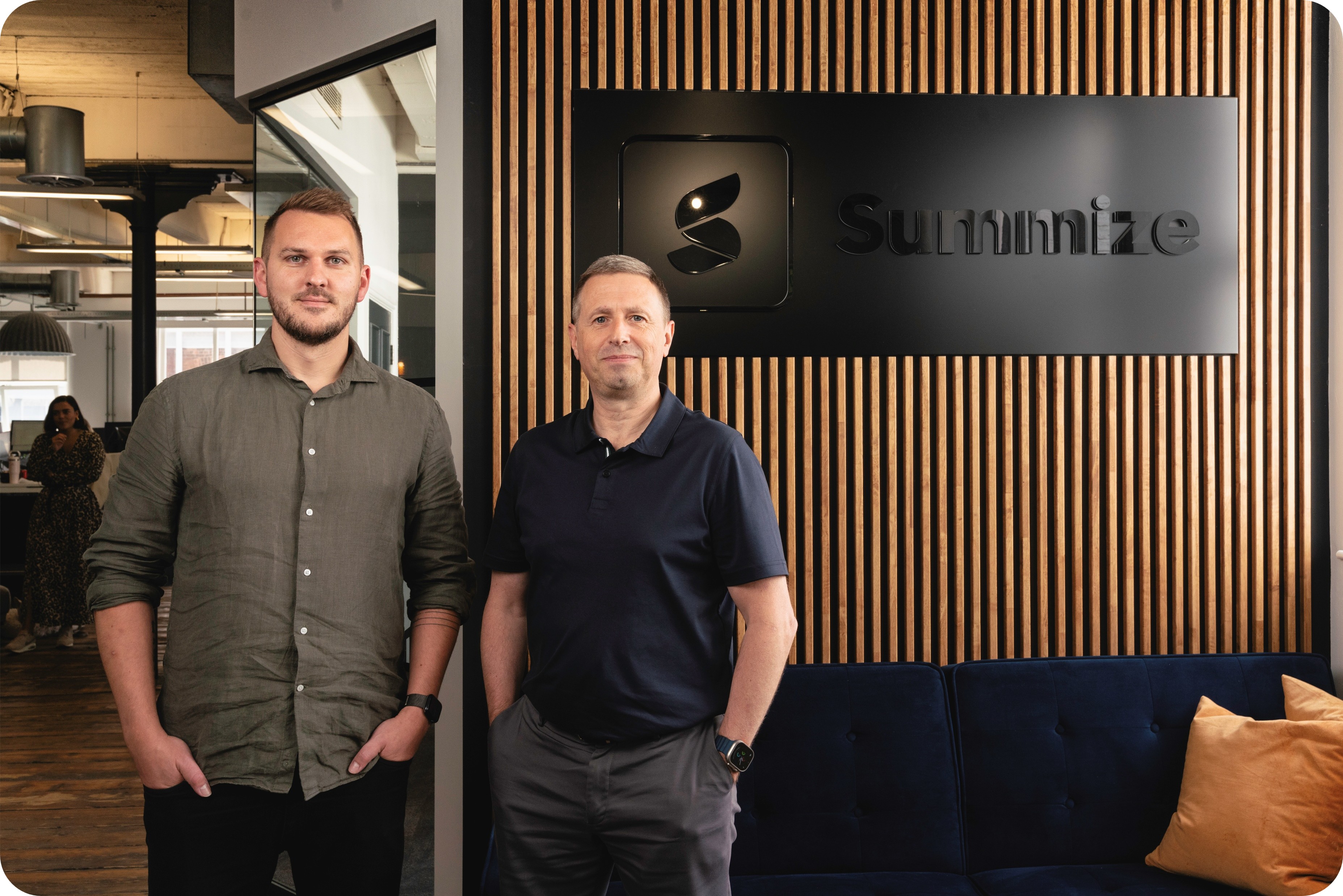
Alongside Tom Dunlop, David Smith founded Summize to meet the needs of legal teams everywhere. With over 30 years of experience in the IT and software development industry, David brings deep technical expertise and a practical, business-first mindset to Summize. Before co-founding the company, he worked at AppSense (later LANDESK and Ivanti), where the original idea for Summize first took shape.
Today, as Chief Information Security Officer, David focuses on making sure that Summize’s engineering function, CLM infrastructure and platform can scale reliably as the company grows.
Connect on LinkedInHear from David!
Get to know more about David, his career and what it means to be the CISO at Summize, in our video.
David, tell us about your career history and expertise
I started working with computers back in 1992, which feels like a long time ago now. My first role was in an in-house IT team, writing software in COBOL to support core business functions like sales orders, stock control and invoicing. That early experience gave me a really solid understanding of how businesses actually operate, because the software touched so many different departments.
From there, I moved across a number of companies and roles, working both in in-house IT teams and in software houses. Over the last 30-plus years, I’ve worked with a wide range of programming languages (COBOL, C Sharp, Angular and Terraform, to name a few) and technologies, and I’ve seen the industry evolve from mainframe computers that filled entire rooms to cloud-based platforms you can run from a laptop.
Over that time, my roles progressed from junior developer to senior developer, architect and then into managing teams, which has been a steady progression to where I am now.
While the technology has changed massively, the fundamentals haven’t. It’s still about building systems that are reliable, scalable and genuinely useful for the people using them.

Tom Dunlop
CEO and Founder
"Seeing how far Summize has come is still slightly surreal at times. From our first “office” in Starbucks Birchwood to now teams and offices across Manchester, Boston and San Diego."


What made you want to co-found Summize and build the technology behind it?
Summize really started as a technical challenge. While, our now CEO, Tom Dunlop and I were working together, he asked me one afternoon whether it was possible to take a contract, break it down into sections and reliably extract specific information from it. At the time, that was far from straightforward.
We started experimenting in our spare time, testing different approaches and technologies. A lot of evenings were spent at home, laptop open – my wife joked that she saw my head more than my face in the early days – trying things out and sending results back and forth. The tools available then, especially around OCR and document processing, were much more limited than they are today, so a lot of progress came through iteration.
What really attracted me to this project was the problem itself. Contracts are complex, high-value documents and there was a clear gap between how critical they are and how little technology was being used to work with them effectively. Eventually, we built a very basic web application (which we still have screenshots of – they give our UX Designers nightmares). Then we started getting feedback from in-house legal professionals and we realized how much value this could deliver – that’s the point that it felt like we were really onto something.
What does it mean to be the CISO at Summize?
For me, being CISO is about making sure engineering is functioning properly, and that the application and infrastructure can be support day-to-day. A lot of it is operational – keeping things running, taking in feedback and making sure the team has what it needs.
We have a good balance across the leadership team. Richard Somerfield, our Chief Technology Officer, is very strong on the product side and the development work that goes with that, and our roles complement each other well. Between us, we cover both the strategic and practical sides of building and running our contract lifecycle management (CLM) platform.
As CISO, no two days are the same – each day brings new challenges, which is one of the reasons the role still feels so fresh. It doesn’t feel stale, even after eight years – there’s always something new to work on.
What do you find most interesting about the legal tech space?
What surprised me most initially was how little technology the legal industry historically relied on. Beyond tools like e-signature, there wasn’t a lot of supporting tech in place for such a critical function.
That’s changed rapidly in recent years, and that’s what makes the space so interesting. From a development perspective, it’s an exciting space because there’s still so much opportunity. The market is evolving quickly, and it feels like we’re only just scratching the surface of what’s possible.
What does the future look like at Summize, and what are you most excited about?
Seeing how far Summize has come is still slightly surreal at times. We often joke that Starbucks Birchwood was our first office, and now we have teams and offices across Manchester, Boston and San Diego.
Looking ahead, I’m excited about continuing to scale the business in a sustainable way – growing the team, strengthening our processes and building technology that can support customers globally. The changes happening around AI are also incredibly interesting, and they open up new possibilities for how we think about contracts and legal work more broadly.
Ultimately, what excites me most is that Summize still feels like it’s just getting started.
.webp)

.webp)

.webp)

Discover careers at Summize
Join our team of learners, innovators, forward-thinkers, and problem-solvers.
Discover CareersFrequently Asked Questions
View all